Network Service Components Approach
This approach has its particular advantages, as only it allows authentication and authorization of customers with the help of RADIUS protocol.
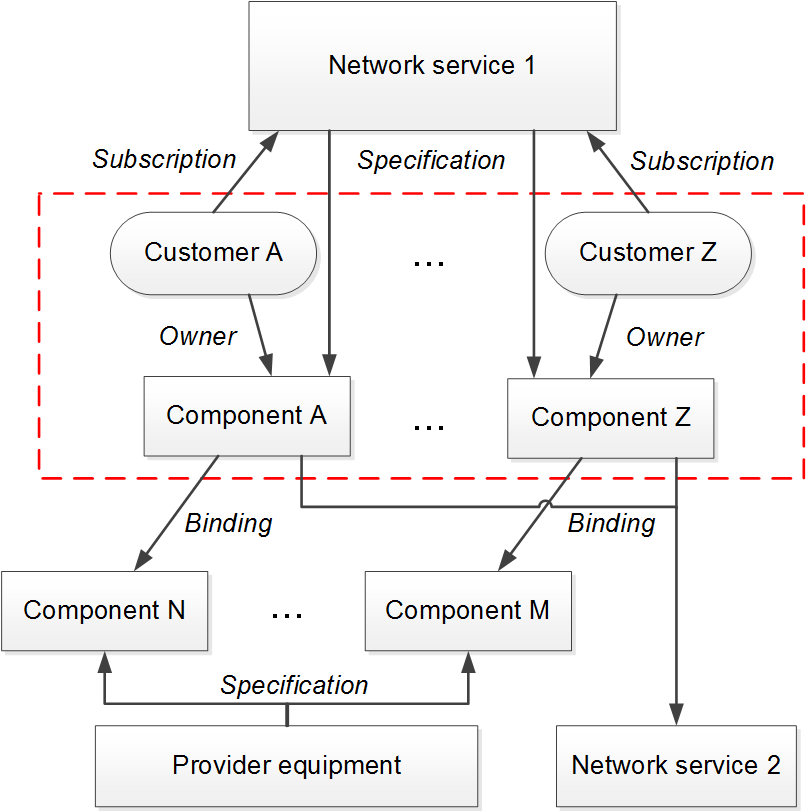
Scheme 14: Network service components approach
In general, the implementation in done in the following steps:
-
adding a network service component;
-
adding addresses to network service components;
-
adding bindings to equipment components, pieces of equipment, network services.
Examples of Network Service Components Approach
See below two examples of the network service components approach implementation.
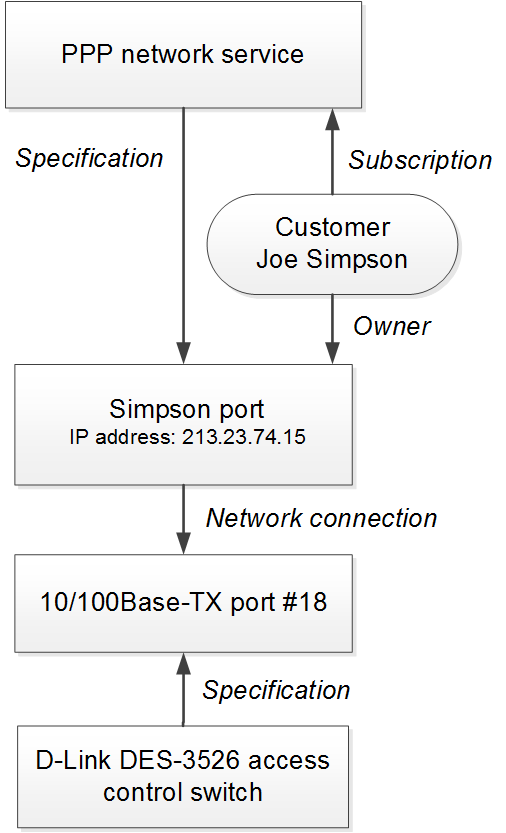
Scheme 15: Example of PPP access implementation
In the example, the service provider uses PPP to provide broadband services. On the basis of VPN concentrator catalog entry, the PPP network service is created. On the customer's page, a PPP network service component of the Port type is added. For it, the binding to the switch port of the Network connection type is created. To create the login and password, the customer is subscribed via the component to the PPP service on the Services tab. For the VPN concentrator entry, events of the abovementioned binding type are set.
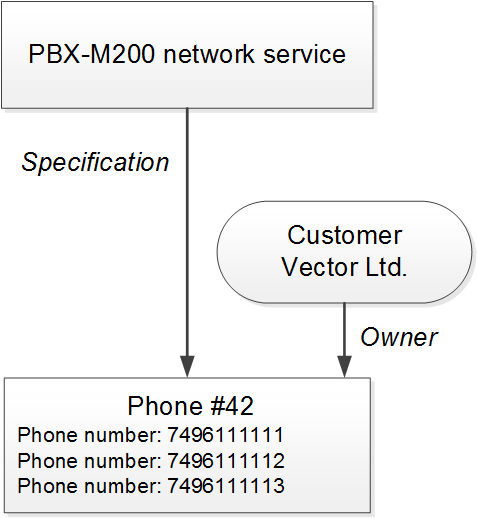
Scheme 16: Providing phone services
In the second example, the service provider, within the network services component approach, provides phone services to an organization. For the PBX-M200 network service, a component of the Phone type is added. For the component, the address of the Phone number type is added. In this case, the organization uses several telephone numbers. Consequently, to all of the organization's telephone numbers one common service (a common price plan) can be applied. Events for the PBX-M200 entry are set by the Specification binding type.
In case the customer uses a fixed phone service, there is no need to subscribe him or her to the PBX-M200 service, because the authentication by login and password is not used. If the provider offers IP telephony services, a customer has to be subscribed to this service via its component.